Saturday, March 19, 2016

Perfectionism Symptoms

Yes, I am a perfectionist. I love things neat and organized, what can I do. It makes me very happy, so I do it. Here's one of my perfectionism symptoms:


I created a google doc where I can organize "the system". For now, this is what I have, and I can picture an entire magazine with those. I'm following my ideas of adding more to the lit mag concept, which I explained in a previous post, and I'm developing the "how that would be accomplished". As it can be noticed, the parts that I've added don't make up too much of the magazine, as they are limited to two-page spreads or two pieces. My next step is start working on what each section will have for the edition I'm creating.

Also, I'm figuring out a schedule for myself. I'm on spring break right now, and telling myself that I'll be working tirelessly on this project is not realistic, so I decided to set apart some hours of my week for that. I want to visit Barnes & Noble to look at some literary magazines, be inspired. I'll set some hours apart to work on the table of contents -the WHOLE thing, even design. I'll set two hours apart to decide what my two-page spread and cover will be -I want this done so I can start designing both when I come back from spring break.

That is pretty much it. I'm happy I've got my mind wrapped around this.

Snapshots

Recently, during my creative writing class, I came across a very interesting piece. It was about this girl and a spider, basically describing the spider walking on her skin. While I was reading it, all I could think was "THIS IS REALLY COOL!", but toward the end I read the word "snapshot" and suddenly a light shone in my mind. What if I had a whole section in my magazine dedicated to snapshots? Oh, yes! So I did some thinking, because I needed to come up with a feasible way to make this happen. The best option I could come up with was: the hypothetical photographers would got out in the beautiful, wild world to take many pictures; then these photographs would be presented to a set of hypothetical writers, who would each choose one that inspires him/her and write something -yes, anything, that's the beauty of it. (In my mind I have a full working magazine on a tall, fancy building in New York City). The purpose is to keep it simple, but also meaningful, and to create a connection between the photograph and the piece; it's a way of having something unique and nice for readers to consume quickly.

The Guardian does something like that, but they only have the pictures, and they are all related to politics and world issues (1867 stays away from all that) -they call it "Twenty photographs of the week". That's how I got the idea of having my hypothetical photographers going out in the world to take pictures -to get snapshots of the moment, the right now, the current events. So I went there and looked around last week's pearls, and decided to create and example of how this would kinda go (keep in mind that on the real hypothetical magazine my hypothetical writers would have other hypothetical staff to read their pieces and perfect it; this was all me, myself, and I).

Picture I stole from The Guardian. Thanks, guys!
Black is for the emptiness. For that space in my closet that used to be yours. For that shelf on the bathroom that held your toothbrush and deodorant. For the void beside me on our bed that permeates eternal coldness and shivers and cries. For the spot in my heart that used to have your name written, now scratched by your hateful actions.
Purple is for all the marks. For all the bruises and scars that you left on me. For all the lessons you taught me on how to never let myself be treated again. For all your insane words that cut my skin and made me bleed and changed me for life. For all the purple bags underneath my watered eyes after a night pondering why you piously let me believe your lies.
Blue is for me, blue. For all the sadness you put me through. For all the wasted time I had to oblige my heart to consent with, while my blood got colder and colder each time you touched me. For all the nights my eyes grew the size of an apple, my tears were so abundant that they became scarce, and each sob threw a piece of my soul out of my body.
Green is for hope. Hope I carry above all others. Hope that guides me through this road and keeps me from hurting my toes with rocks or glass or dirt. Hope that wakes me up every morning after you left my body. Hope that whispers in my ear that today is just another day, tomorrow will be a better day, and the day after will be even better. Hope that keeps my head high looking for places to find happiness, since it’s been hard to find it within. Hope that shines in the distance, green, easy on the eyes, bright and beautiful, that speaks to me, yells that I can reach if I just keep pushing and pushing, because it is not far and it is not just in my mind.

My first demonstration of fiction writing skills in the blog, I hope you enjoy it!

Anyway, I'm saying, or better yet, writing all this because this might be my two-page spread. Yes, I know I said I was going to create "the system" before starting anything, but you can't program epiphanies. Epiphanies just happen. And they are so rare that when they do happen, you gotta make use of them right away. I couldn't let this one go because I very much like it, and I'd love to just go out in the wild, broad world taking pictures to inspire me to write.


"Twenty Photographs of the Week | Art and Design | The Guardian." The Guardian. Guardian News and Media. Web. 19 Mar. 2016. <http://www.theguardian.com/artanddesign/series/twenty-photographs-of-the-week>. 
Powell, Jim. "The 20 Photographs of the Week." The Guardian. Guardian News and Media, 2016. Web. 19 Mar. 2016. <http://www.theguardian.com/artanddesign/gallery/2016/mar/12/the-20-photographs-of-the-week#img-11>. 

Friday, March 18, 2016

It's Lit

I think, I'm not completely, positively sure, but I think that I have the concept of my magazine pretty much done in my mind. I spent this week thinking about what I want to include and what I can add without taking too much off the "lit mag vibe", and I believe I have come up with a nice idea. I am reinventing the literary magazine! (Yes, I know I'm not reinventing it for the whole world -NOT YET- but it's a good way to start). I want to do that because I think it gives me more space to have creative freedom and it is a way for me to create something entirely new. Besides, I think it will be more of a challenge, for me, to successfully portray the concept of this magazine I have in mind than simply creating a lit journal. Plus, it gives me a wider target audience, which is always nice and always welcome.
So here is what my mind has been working on for this past week: I will have a mix between a lit mag and a reg mag (that's a normal magazine, if you didn't get it). How? With five very simple steps:

1- I will maintain the prose, poetry, and art, obviously.
2- But I'll add more! What more? Op-eds, reviews and critiques, and news about the literary/art world.
3- The op-eds will be mostly of themes related to the magazine -literature, art, media, no politics, economics, and sports.
4- The reviews and critiques will be of books, expos, galleries, authors, artists, among others of the same field.
5- And finally, the news will be limited to a two-page spread with bright, insightful, captivating images, and terse descriptions.

With these ideas I'm in great shape to start designing my magazine. Right now, I'm not as concerned with creating my pages as I am with figuring out the sections of the mag -I want to have a clear "system" for 1867 before I start creating anything, so it hypothetically flows as smoothly as possible, and I can be sure the cover, table of contents, and two-page spread aren't out of context or weak. I'll end up creating the table of contents first -partially because I have no idea what to do for my cover and two-page spread yet, but mostly because it follows my thought process of "the system".

This post is nice and sweet, but now I'm getting to my real intentions behind it. I am trying to figure out my target audience. The usual audience for lit mags are people who SPECIFICALLY enjoy them, and therefore have a subscription or simply buy. Literary magazines usually publish twice or four times a year -the ones that deviate from this pattern are very rare-, mostly because they require contribution from random people with random moods that randomly write -writers. They don't have an established staff to write all the pieces because that's not what they are about -they are about presenting many different artists to the world. I wish to keep that, but also have the idea of a staff to write the op-eds, reviews, and news. Balance. This way I can add expand my target audience. I'll go from "first and foremost about writers" to "first and foremost about writers and readers", and by doing that I'll be reaching to an adult, middle to upper class, appreciative of art audience beyond the usual writers and publishers. For me, that is very important as it is a way to smash underdog, bohemian literature in more people's face. I'll be giving an even better opportunity to unknown but talented writers that are abundant in this highly commercialized, standardized, snobbish world of ours.

I think I've found my beautiful cause. Lit.


"Council of Literary Magazines and Presses." Council of Literary Magazines and Presses. Web. 18 Mar. 2016. <https://www.clmp.org/indie_publishing/indi_litpubl.html>. 
"Literary Magazines." And Journals Database| Poets & Writers. Web. 18 Mar. 2016. <http://www.pw.org/literary_magazines>. 

Saturday, March 12, 2016

Let Me Clarify It

I realized that I've been talking about a "literary magazine" in my last two posts without really explaining what it is. So here it is:

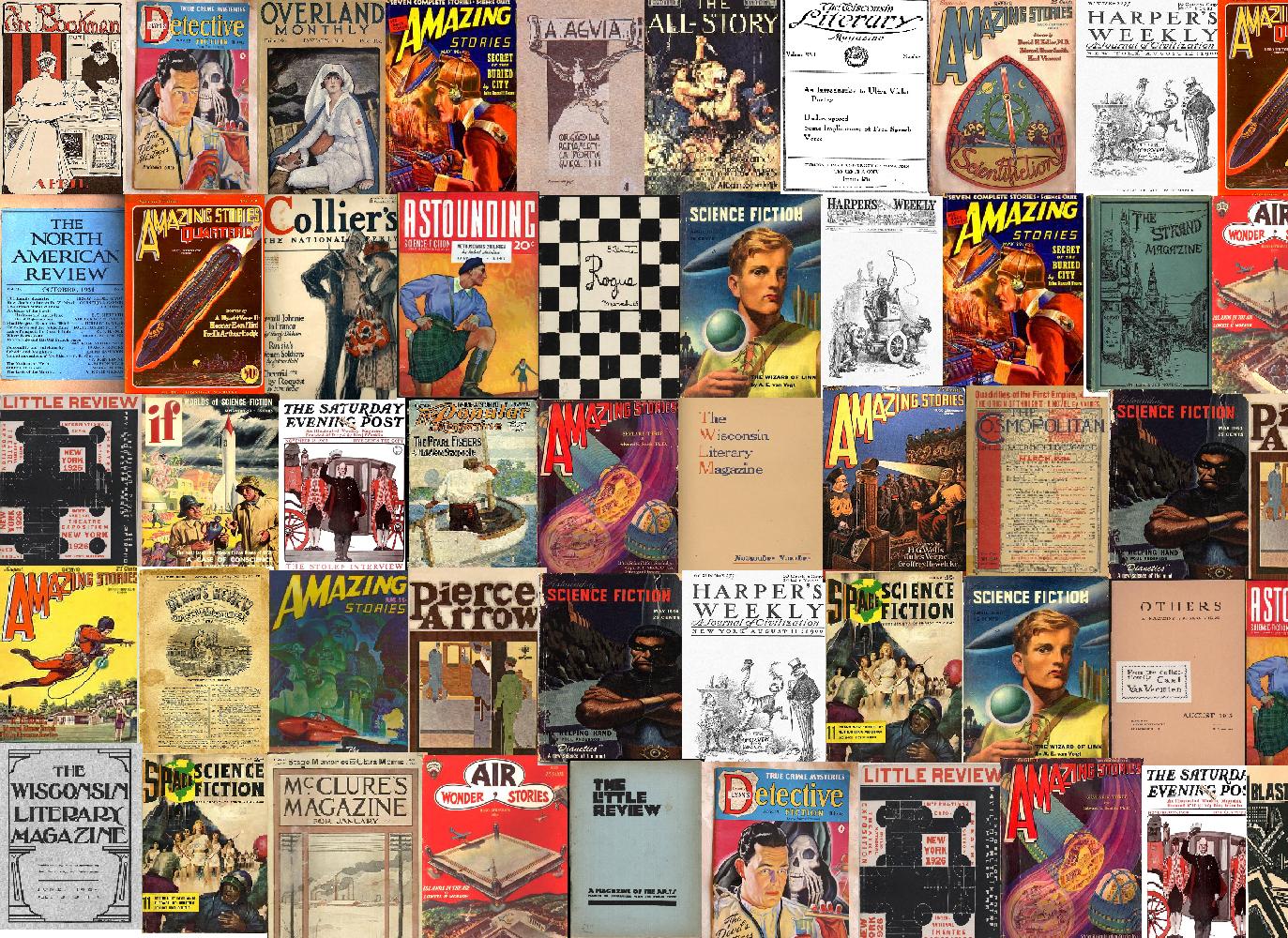
Lit mags usually display these awesome, unique, super artsy covers. Impossible not to love.

The Dial, one of the earliest literary
magazines, was first published in 1840.
A literary magazine is a collection of pages, put together much like a conventional magazine, that have art as a topic. Lit mags or lit journals, as they are also called, serve the purpose of showcasing prose, poetry, and artwork from less known, or even anonymous, artists. These magazines are made by and for the arts -not for the profit or the fame, but with the intent of sharing and spreading pieces of the souls of writers and artists around the world, with whoever wants to appreciate them. It is a beautiful cause.

But people don't only submit pieces to a lit mag with the intent of blessing the world with the intricate, beautiful depths of their hearts. The magazines are often used as a platform to reach acknowledgement within the literary world. Many writers that are big names in the literary world started off with literary journals. Ralph Waldo Emerson and Margaret Fuller with their lit mag, The Dial, are to this day two of the most well known transcendentalist writers.

My inspiration! (this post is becoming very visual
and I love it)
Despite that, they make between none and little profit. Literary magazines are either free, funded by the government, available online, or cost little. The writers and artists that submit material to them don't usually get money for their work, and if they do, it's not much. There are some exceptions, such as The New Yorker, but these are the ones that include some aspects of conventional magazines -articles and opinion pages. That is because the people that read lit journals are usually strictly interested in them, rather than literature and arts in general.

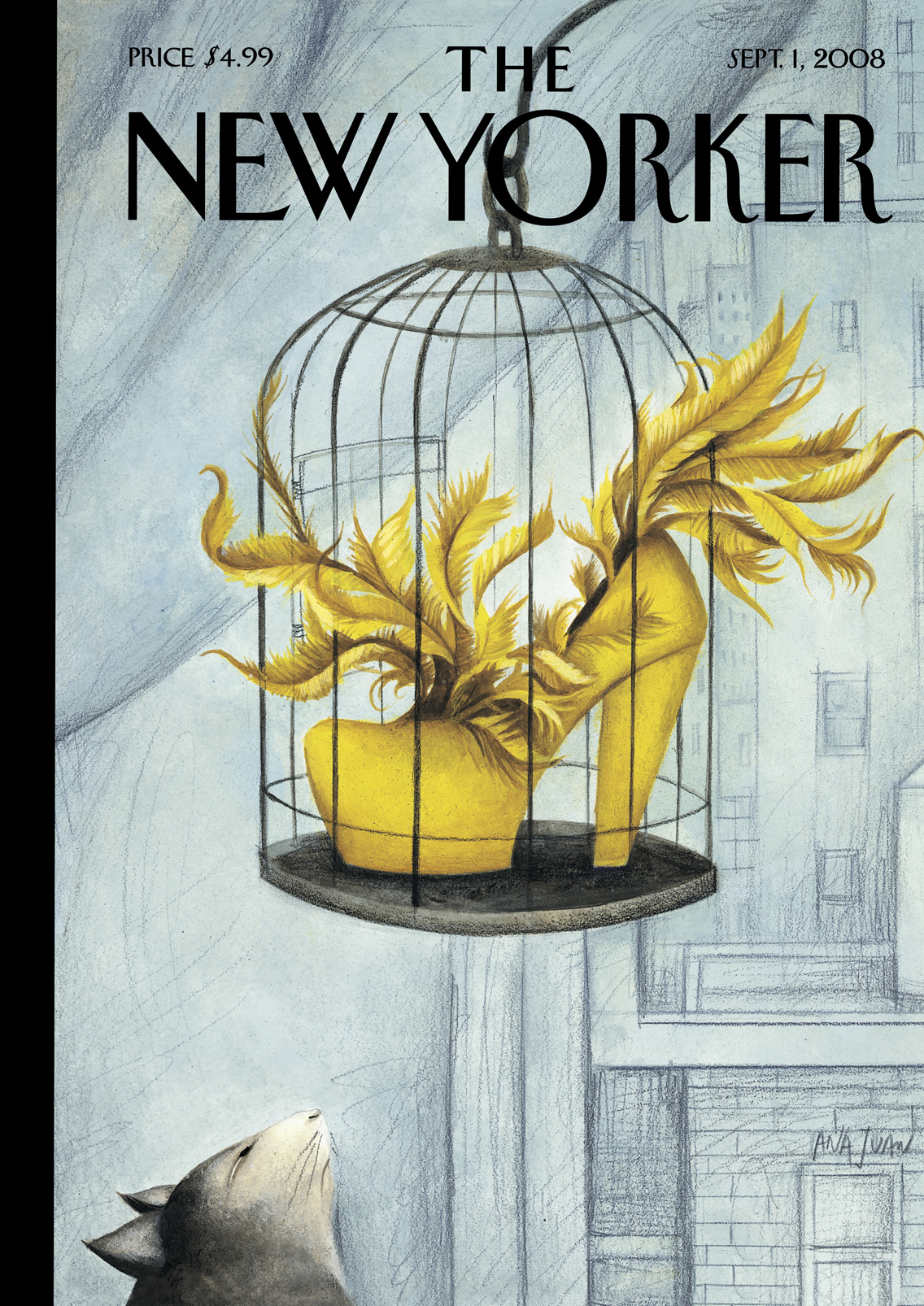
My intentions in choosing this topic are simple: I want to be able to create a literary magazine that will appeal to a wider audience. But when I start thinking about the how... that's when things start getting complicated. My inspiration, for now, is The New Yorker. Even though I don't have it all crystal clear, figured out in my mind, I know I'm going somewhere.

And it will become a beautiful cause.


"Literary Journals And Magazines: What They Are, Who Runs Them, and How They Benefit You - Writer's Relief, Inc." Writer's Relief, Inc. 2010. Web. 12 Mar. 2016. <http://writersrelief.com/blog/2010/06/literary-journals-and-magazines-what-they-are-who-runs-them-and-how-they-benefit-you/>.
"Literary Magazine." Wikipedia. Wikimedia Foundation. Web. 12 Mar. 2016. <https://en.wikipedia.org/wiki/Literary_magazine>.
"Magazine - The New Yorker." The New Yorker. Web. 12 Mar. 2016. <http://www.newyorker.com/magazine>.
"The Online Books Page." The Dial Archives. Web. 12 Mar. 2016. <http://onlinebooks.library.upenn.edu/webbin/serial?id=thedial>. 
"Top 50 Literary Magazines." Top 50 Literary Magazines. Web. 12 Mar. 2016. <http://www.everywritersresource.com/topliterarymagazines.html>.

Friday, March 11, 2016

1867

I guess you might be wondering why the description of my blog says "A journey through 1867." Well, no, this is not a magazine about 1867 -in fact, I'm not sure I know of any major events that happened during 1867 (Wikipedia just informed me that it was the year when African Americans gained voting rights in D.C. and Alaska was purchased from Russia). No, this is not a magazine taking place in 1867. No, it is not about African Americans gaining voting rights in D.C., although I think that'd be a very good topic to explore in a magazine -in 1867, I mean. And now I'm starting to realize I've already said that I'll be creating a literary magazine, which makes all these options I just listed very unlikely to have crossed your mind.

1867 has become a big topic in this post, so fun fact:
it is a prime number.
So the most likely option: no, this is not a magazine about literature in the 1867 or how certain literary movements were happening during mid-nineteenth century (and that's realism, in case you're wondering). This is just a literary magazine that I decided to title 1867.

Why? Why not, I ask you. Well, there is a why yes and it's very simple: Typewriters had been around the world, being created, un-created, improved, since the 16th century. The first record of an "impressing machine" is in 1575, from the Italian Francesco Rampazzetto, followed by Henry Mill, who actually obtained a patent for his machine. But the creation of the typewriter is widely attributed to Christopher Latham Sholes; his patent is from 1866, but the machine became commercially sold and successful in 1867.

Evolution of typewriters for you. Look how beautiful they are.
One of my greatest wishes since I was a kid was to own a typewriter. My grandfather owns one and I remember one day he actually let me use it -actually type on it and play around! As far as I remember it, it was an awesome experience - even though the keys were hard to press, I kept messing up, and refilling the paper was a very tricky process. But it was something that, for me, as a little child, was magical. I was playing with a grown-up toy and my grandpa kept saying that I was doing "all right." I don't know if that moment contributed to my later on developed fondness of writing and desire to become a writer, but I choose to believe so. I still wish to buy a typewriter one day, even though I know is much easier to just type on my computer, or even own my smartphone, just because of the experience it provides. Because it is an special experience. The invention of the typewriter marked a time where humanity went from having to hand write every single piece of document, legislation, letter, prose, poetry, magazine to having the luxury of a tool to make all that easier. It went from wanting-to-kill-themselves-from-sore-hands to relaxed-hands-and-130-words-per-minute. As many older inventions, most people nowadays take typewriters for granted, just like the wheels or skyscrapers - they have been around for a long time now, and newer, better versions are being built every second. We often forget that we started somewhere: from a simple idea of a simple man on a far away, simple place. We often forget that there was a spark that started this fire, and without this spark there wouldn't be fire today.


"The Typing Life - The New Yorker." The New Yorker. Web. 11 Mar. 2016. <http://www.newyorker.com/magazine/2007/04/09/the-typing-life>. 
"Typewriter." Wikipedia. Wikimedia Foundation. Web. 11 Mar. 2016. <https://en.wikipedia.org/wiki/Typewriter>.
"Christopher Latham Sholes." Wikipedia. Wikimedia Foundation. Web. 11 Mar. 2016. <https://en.wikipedia.org/wiki/Christopher_Latham_Sholes#Inventing_the_typewriter>.
"The Evolution of the Typewriter." The Coolector Online Mens Lifestyle Magazine Design Gear Fashion. 2014. Web. 11 Mar. 2016. <http://www.thecoolector.com/evolution-typewriter/>. 

Monday, March 7, 2016

Hi!

My name is Larissa Martins, but I'd rather be called Lari. 

This is my corner, my space, my place to be creative and artistic and express my ideas. As of right now, I see this blog as the one thing I never had: a tangible local to lay down the messes of my brain, sort them out, and, hopefully, create a great final product. Being completely honest, I was never attracted by the idea of having a blog, mainly because I have a hard time organizing my thoughts into coherent, entertaining text. I am a writer, but I write fiction; the idea of having to open up my mind and talk about my struggles, obstacles, problems just doesn't sound right. But now I have the opportunity to overcome this and I think it will be a big, although difficult, step for me.

I will be creating a magazine, a magazine that expresses something I am very passionate about, and hope to be so for the rest of my life: writing. My idea, since the beginning of the year, when the two options of projects were presented and explained to my class, has been to create a literary magazine. I hope to become a writer one day, and by choosing the magazine I saw the opportunity of exploring the more "formulaic" style of a magazine, while adding my own creative, ingenious ideas.

I am extremely excited for starting this journey, and I hope I can transmit it well through this blog. I know I'll have my moments of stress and despair, where I'll think everything is about to fall down, but I'll also have epiphanies and moments of bliss, where everything couldn't look better. 

Welcome to my corner. I hope you feel attached to it as much as I do.